Posts

Showing posts with the label Fall Protection

The Top Safety Challenges Of Your ISO Container Fleet: Part 3

Image
When your employees load and unload ISO containers at your facility, workplace safety is a top concern. Without the proper safety equipment, workers are at risk of serious incidents that may cause injuries or even fatalities. In blogs one and two of this three-part series, we highlighted specific isotainer safety challenges, including a wide variety of ISO container configurations and a lack of standard safety protocols. In the final blog of this series, we offer safety solutions to help your company protect employees who load and unload ISO containers: Incorporate An Elevating Platform With all the possible configurations and loading scenarios your workers could encounter when handling ISO containers, it’s unlikely your existing loading platforms and other safety equipment have the flexibility to provide safe access in all situations. Railings and safety platforms provide protection from some types of falls, but most loading platforms aren’t able to prevent workers from falling t...

Why Passive Fall Protection is Safer than PPE

Image
  Falling employees cost companies billions in lost workdays. OSHA requires that any workplace that involves altitude to implement precautionary measures as soon as possible. If a fall hazard cannot be removed entirely, passive systems like guardrails and safety nets provide the next best option to ensure workers remain safe. These devices don't require interaction from workers themselves and are always ready to protect against falls. 1. No Harness or PPE Required Falls are one of the leading causes of fatal construction injuries. Even when workers wear PPE, falls can still result in serious work-related injuries and lost time for all concerned parties. Movement around a worksite is key to worker safety and health, so providing a safe work environment begins with conducting a comprehensive risk analysis and creating appropriate protocols. Employing passive fall protection plans is essential to workplace safety protocols, with passive systems like guardrails and safety netting helpi...

Understanding the Hierarchy of Fall Protection

Image
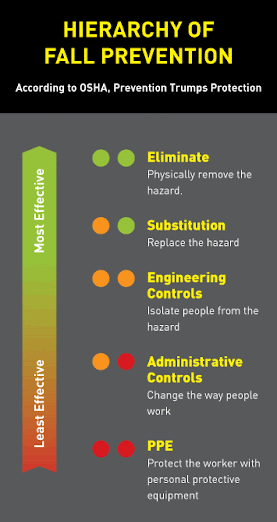
The Hierarchy of Fall Protection in Layman's Terms   Working at height can be hazardous and requires special equipment. Many governing bodies such as ANSI and OSHA set guidelines and regulations for these jobs, which may increase safety. Elimination (Stay on the Ground) Working at heights is a necessary aspect of many occupations yet can pose unique safety concerns. Therefore, it's vital that workers familiarize themselves with all available forms of fall protection systems and how they can be used to keep operators safe while performing their duties. Both ANSI and OSHA's Hierarchy of Hazard Controls state the initial step should be eliminating falling hazards from work environments - this means changing working environments, so employees aren't exposed to fall hazards to begin with, such as moving machinery onto the ground instead of the roof. While eliminating falls would always be preferable, sometimes this option simply isn't possible or could increase...

Solutions For Flatbed Tarping

Image
In many cases, flatbed truck drivers and other workers in shipping/receiving must access heights of four feet or more when loading and unloading cargo on flatbed trailer trucks. Without the proper safety equipment and procedures in place, falls from flatbed trucks can be fatal. The good news is that there are effective flatbed truck safety solutions that can be incorporated into your facility’s daily operations to help prevent falling from flatbed trailers and keeping your team safe. The first step in minimizing flatbed safety risks is to remove the need for employees to stand on the trailer itself by implementing an overhead tarping system. These systems allow users to easily tarp large, heavy loads and provide the added bonus of creating a protected working surface. While this helps reduce the risk of falls, it’s still possible for employees to fall off the trailer when climbing to and from the tarp or when walking around the flatbed during a load transfer. Another way to protect...

Do Your Truck Spotting Practices Account For The Human Element?

Image
Investing in the right safety equipment is always a best practice. You want to mitigate the risk of injury or death for your customers and employees in a safer environment. But even months of planning and the best fall prevention systems may fail to address a critical safety component – the human element. Falls that cause serious injuries or even death are a vital reminder of the risk involved with loading trucks and the importance of safety. In the daily rush, it may be difficult for drivers and facility managers to imagine that such a tragic accident could happen. What is far more likely to be at the top of a driver’s mind each day is making a living – it’s human nature that drivers are going to look for workarounds to speed up the loading process and increase throughput. For facilities that are looking to safeguard their employees and their customers, here are some key tips to keep in mind. Parking Is The First And Most Important Step If a driver does not first park in the exa...

Flatbed Truck Safety: Are You Ignoring These 3 Risk Factors

Image
From broken necks to head trauma, falling off a flatbed truck is almost guaranteed to cause serious injuries – if not death. From broken necks to head trauma, falling off a flatbed truck is almost guaranteed to cause serious injuries – if not death. Unfortunately, most companies fail to provide effective flatbed safety strategies and fall protection equipment until they’ve had a fatal fall on their own site or at a similar facility. Here are three factors that increase the risk of these falls: Slippery Or Unstable Surfaces In the absence of safer alternatives, employees often walk on top of a flatbed truck in order to secure cargo. This practice entails a significant risk that they could trip or slip on wet or uneven surfaces. In fact, tarping a flatbed load is one of the most dangerous activities a driver faces on the job. Walking all over a load while simultaneously trying to position a heavy, cumbersome tarp risks a debilitating fall.   Irregular Load Shapes Flatbeds are fr...

Measuring for Safety

Image
  Keep Operations Rolling and Employees Safer The key to successfully installing fall protection safety equipment is accurate measurement of the center line. As simple as this may sound, it is where companies often get into trouble and end up with equipment that doesn’t fit the application requirements. Three Steps to Get the Right Measurements 1. Establish the Center Line . Your design standard can be anything it needs to be, but establishing the center line is critical . These measurements are the basis of the drawings we send back to you for sign-off. When you measure, always begin from the center of the vehicle to the face of what you are mounting the access gangway on (see Figure 1). Ideally, you would position a vehicle in the loading area so that the measurement is spot on. If you are unable to position a vehicle in your facility due to the current restrictions, then you should measure where the truck(s) should line up, possibly marked by a stripe on the floor. For ra...

Improve Throughput and Keep Workers Safer

Image
Assessing Your Workplace for Overall Safety Keeping your workers safe while loading and unloading trucks is one of those things that can keep you up at night—or at least, the worry of what could happen if unsafe conditions are not addressed. Working at heights presents a wide range of potential safety hazards. Improperly secured materials or equipment can fall and injure workers. Fast-paced environments that require moving materials quickly and efficiently can put workers at risk of serious injury or death from falling. Creating a safe workplace starts with an overall safety assessment to determine if you are doing everything you can to keep workers safer. Over time, loading patterns, vehicles or equipment, and personnel may change, which can impact operations and the safety of workers. Once you know where you are at, you can update your system or build the right fall protection system for your specific environment and operation. The Height of Worker Safety Keeping workers safe w...

How to Know if Your Loading Rack Needs an Update

Image
If loading racks came with expiration dates it would be easy to tell when you needed addressing. But because they don't it can be difficult sometimes to know when one needs updating. Maybe the current loading rack got to the jobsite before you did and you may not really know what it was designed to do. Or maybe your company's loading rack has seen better days after many years of service. If the loading rack on the job is beginning to show its years or you have no idea what vehicle(s) the loading rack was built for and there’s no documentation, it’s probably time for an update. At the very least have it evaluated to make sure it meets industry standards. The dangers of using outdated fall prevention equipment are many and can cause huge losses for your company whether it is in lives, injuries, lawsuits, or downtime. If you notice any of the following, give Sam Carbis Solutions Group  a call and we will come to your jobsite and evaluate your fall prevention equipment: • Gaps...

The Real ROI of A Fall Protection Safety Program

Image
 Safety plays a vital part in the business world since it has an immediate impact on factors such as productivity, employee morale, and regulatory compliance. Even though all areas of safety are important, particular attention should be paid to fall prevention systems because of the severity of accidents they prevent. The return on investment (ROI) for such systems is beyond convincing despite the fact that there are upfront costs associated with implementation. It is a cost-saving technique, a life-saving gadget, and a venture that generates profits all packaged into one business opportunity. To begin, it is important to remember that one must never discount the importance of the human factor. When companies make significant investments in all-encompassing fall prevention systems, they are sending their workforces the powerful message that the employees' health and safety is a primary concern. This not only boosts the morale of the workforce but also raises their overall output....

Taking the Time for Safety

Image
Customers often come to us with a “simple” request: a new gangway, loading arm, or safety platform, for example. Safety involves many factors, so rather than merely taking payment and shipping out a product, we often ask a lot of questions. By learning more about how the product will be used, we can ensure that our customers get the right equipment in place to keep them operating at maximum efficiency. As Long As it Does the Job, Right? Most of us have, at some point, used the wrong tool for the job. For example, butter knives seem to be the universal substitute for screwdrivers. Unfortunately, the price of using the wrong tool for the job at work can cost a lot more than just a drawer full of bent cutlery.  Making sure you have the right tool is our job. The Sam Carbis Solutions Group team asks the tough—and vital—questions: Have loading patterns changed? Has equipment been maintained regularly? Have employees been properly trained? On the surface, it may seem that orderi...

The "Cheapest" Worker Safety Solutions Can Be The Most Expensive

Image
Managers worth their salt are always looking out for their company’s best interests, seeking the best solutions to operational challenges to keep products flowing and workers safe. While fiscal responsibility is important, the least expensive “solution” may end up being the least effective when it comes to ensuring worker safety—and can end up costing more in the long run. A petrochemical company recently asked Sam Carbis Solutions Group to provide a quote for an equipment upgrade on a loading rack. The upgrade was needed to accommodate additional product handling and switching from tank trucks to ISO containers. After submitting a proposal, we visited the company to talk about the parameters of the project and what else we could do to assist them. When we arrived, we encountered a challenge from the project manager, who questioned why we felt confident enough about obtaining their business to be onsite already. He indicated that our proposal was $10,000 higher than a competitive bid...

Mitigating Liquid Terminal Access Hazzards

Image
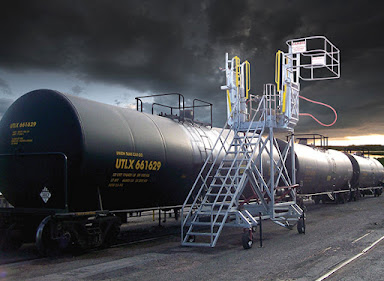
What constitutes creating safe access to liquid terminal platforms and equipment has evolved dramatically in recent years. In the not-too-distant past, workers may have simply climbed a railcar for access, creating a worse-case risk scenario. “Fall protection” then advanced to incorporating a ramp to reach a railcar, and possibly a protective cage. Changing requirements have also impacted modern fall protection practices. In 2016, OSHA updated industry standards, requiring the regular inspection and maintenance of walking-working surfaces, and training of workers on fall and equipment hazards. As newer, more comprehensive liquid terminal fall protection solutions have emerged, the limitations of conventional ramps and cages have become more evident, with more and more railway companies seeking full fall protection systems.   Elevated Railway Cages for Full Fall Protection   Today, elevated railway cages are the gold standard for liquid terminal fall protection. Unlike ab...

Five Flatbed Fall Protection Strategies: Which Is Right For You?

Image
Whether your facility has recently suffered an accident or you’re taking a proactive approach to flatbed truck safety, here’s some good news: The safety equipment available today offers far more protection than hard hats and lifelines alone. Here are five fall protection strategies to consider for improving flatbed truck safety at your facility or work site: Overhead Tarping Systems The first step in preventing falls from flatbed trucks is to avoid having workers climb onto the trailer in the first place. An overhead tarping system provides a safer way to cover an entire flatbed trailer by eliminating the risks of standing or walking on the trailer itself. The operator simply connects a tarp to the spreader bar, which is suspended from an overhead track. Using a powered winch system and hand-held control, it’s easy for the operator to spread the tarp across the entire flatbed without leaving the ground. Access Equipment Platforms designed for flatbed trucks provide a safer work a...

Two Pressing Marine Safety Challenges Your Facility Can't Ignore

In comparison to other shipping vehicles, marine vessels are perhaps the most difficult to secure. Workers are at greater risk of falls and accidents because ships are in constant motion. Add changing tides to the equation, and providing safe access becomes even harder. Despite the challenges, improving marine safety offers significant benefits. Your workforce will be more surefooted on steady marine gangways with handrails , improving loading and unloading efficiency. Other forms of marine safety equipment, such as ship towers, make it easier to access vessels of any height. As you consider your current ship and dock safety measures, ask yourself whether your systems address the following two marine safety challenges: 1. Difficulty Boarding Barges and ships generally come to your facility for one of two reasons: to load or unload. Docks are outfitted well for loading devices to attach to the ship. However, you have to figure out how to get on and off the vessel. This is the risky pa...

Protect Workers During Truck Loading With Fall Prevention Training

Image
Fall prevention often means the difference between life and death. Hundreds of people die from falls on the job every year. While you want to protect your workforce, you may not know where to start. A comprehensive fall prevention program  includes these three pillars: Planning to work safely Providing fall prevention equipment Training workers to use equipment safely If you’re assessing your workplace risks, speaking with a safety expert and purchasing the right fall prevention equipment for your site, you’ve already started working on the “planning” and “providing” pillars. But what about the last, critical piece? Before you can implement an appropriate fall prevention training program, you must understand the difference between fall prevention and fall protection. Fall protection is a backup system for someone who may lose balance in a dangerous area. The purpose is usually to arrest a fall and mitigate the risk of injury. On the other hand, fall prevention is used t...

Protect Workers Tarping Flatbed Trailers With The Right Safety Systems

Image
Many factors make tarping flatbed trailers a dangerous job. Tarps are often heavy, weighing as much as 150 pounds. They are large, unwieldy and difficult to manage, which may lead to ergonomic injuries. In harsh weather conditions like rain, sleet and snow, treading on the plastic tarp may cause your workers to slip and fall from a height. Wind also throws workers off balance when they’re handling a tarp on a flatbed truck. Your workers should be on guard when walking on top of unstable or uneven loads due to the risk of fatal falls. However, this is only a minimum precaution. You need a more comprehensive fall prevention solution to mitigate safety risks. Don’t wait until an injury or death to evaluate your tarping process. Learn how to protect your workers tarping flatbed trailers with the right safety systems for your facility. First, Seek Expert Safety Consulting It’s impossible to simply pick a piece of safety equipment off a list without first assessing your risks. A truck safe...

How To Safeguard Truck Spotting In Your Cement Loading Facility

Image
Loading and unloading a cement truck is a dangerous task, and it’s unlike any other truck loading process. How well a driver spots a truck is more important than any safety solution, and plenty of stories prove this . Still, proper truck spotting is one of the hardest practices to instill in your drivers and operators. Learn more about the importance of truck spotting and how to promote truck safety at your cement loading facility. Importance Of Truck Spotting During The Loading Process Unlike other truck loading processes, the cement loading process requires three steps: 1. Opening the hatch(es) 2. Driving under the dry cement loading spout 3. Closing the hatch(es) The three-step loading process presents additional opportunities for an accident to occur. Even with the right safety equipment, your operators are still at risk of an injury if a cement truck is mis-spotted. During the loading process, truck spotting is more important than the safety equipment you have in place. It’s...

Tips For Transloading Crude Oil From Tanker Trucks To Rail Cars

Image
Transloading is the term used for the process that takes place when a shipment must be transferred from one mode of transportation to another. Transloading is often used in the oil industry because the pipelines to the refineries are in the south so if the well head is somewhere else in the country, the oil has to travel there. Transloading takes place when one type of transportation can’t make the entire journey or it may be more cost effective to transfer the shipment from one mode to another. Usually product (in this scenario it’s crude oil) is transloaded from tank trucks into about 120 connected railcars. Using railcars to carry product may sound old fashioned but it’s still the most consistently effective way to transport lots of products including crude oil. A tank truck terminal transloading to railcars will have a rail spur off the main train track. This way, the railcars can pull in and be loaded. Once loading is complete the cars continue back to the main railway for the jo...

How To Prevent Injuries That Occur In Chemical Manufacturing Plants

Image
Chemical manufacturing plants are full of potential threats to the safety of your employees. Every day, your workers are exposed to hazardous chemicals, which may lead to serious injuries or death. Finding ways to reduce the risk of accidents and implementing fall prevention strategies are critical to workplace safety. To do this, it’s essential to understand the types of injuries that occur in chemical plants and, most importantly, why they occur. Common Injuries At Chemical Manufacturing Plants Chemicals are toxic and highly flammable, making chemical manufacturing plants extremely dangerous. Common injuries that occur at chemical plants include: Chemical burns Slips, trips and falls Overexertion Cuts and scrapes Chemical exposure Inhalation of chemicals Causes Of Accidents In Chemical Plants Even when precautions are taken to reduce the risk of accidents in chemical manufacturing plants, they still occur from time to time. Knowing how and why accidents occur helps you take ad...